Skip to content
Why Prescriptive Operating Systems Stall & What Wins Now
If you have ever implemented a business operating system, felt the initial lift, then hit a wall, you are not alone. You did what the books and coaches told you to. You drew the charts, loaded up on acronyms, and ran the meetings as prescribed.
For a while, things got better. Then the very system that helped you organize started boxing you in.
Your team grew, your challenges evolved, and your tools and system did not. The harder you tried to remain “pure” to the system, the less it seemed to fit your reality.
You will see why in a moment, and you will leave with a more effective way to scale, one that adapts as you grow and puts your business, not the system, first.
The Big Idea
The next evolution in how elite organizations operate is a shift from a prescriptive system to a principles-based framework. Instead of forcing your company to conform to a static set of tools, you align your team around five timeless principles, then you customize the tools and cadences to fit your culture, your industry, and your stage of growth.
At Next Level Growth, we call these the Five Obsessions of Elite Organizations®. Focus on them with discipline, and the byproduct is a custom-tailored system designed for you and by you, that scales with you as you grow, keeps your focus on profit and cash flow, reducing friction, and giving you back control.
Problem → Root Cause → Solution
The Problem: Prescriptions Don’t Evolve and Grow with You
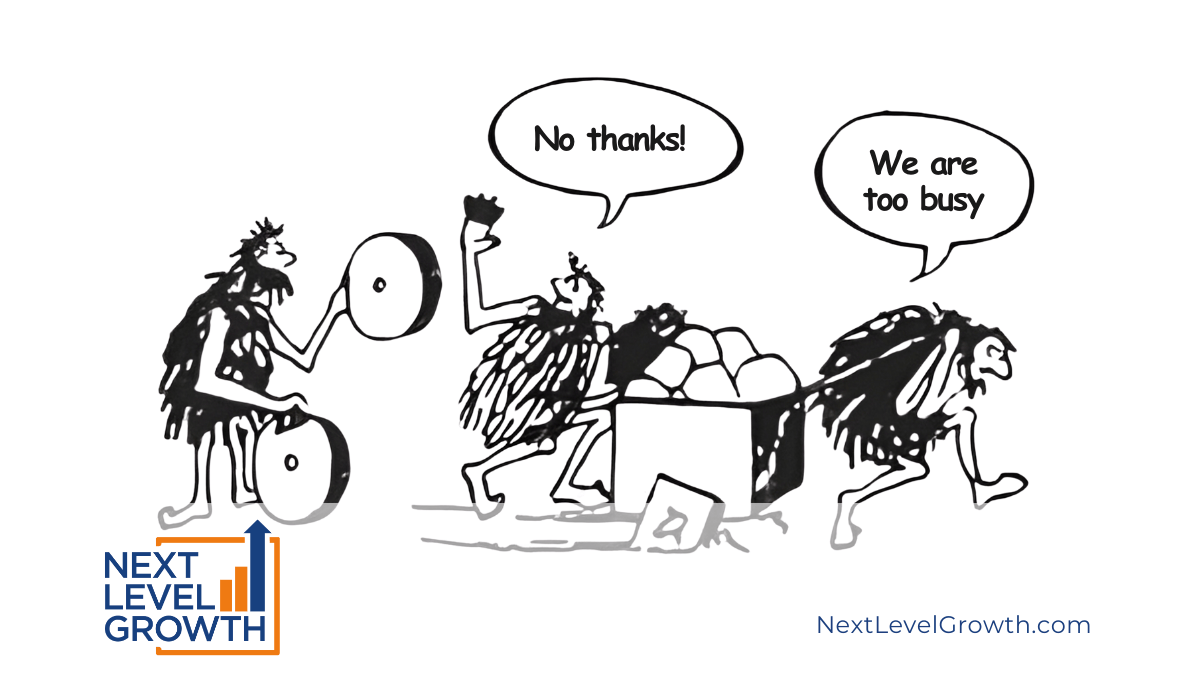
Prescriptive operating systems are good at getting a leadership team out of chaos and into basic execution. But as your organization matures, new constraints appear. Market dynamics shift, complexity increases, and what once felt simple starts to create friction.
You find yourself protecting the system instead of pursuing the outcome. Your people adapt less, silo walls grow higher, and meetings become more about ritual than results.
The Root Cause: System First, User Second
Most popular business operating systems, like EOS®, were built as fixed toolkits. They prioritize adherence, not adaptation. That rigidity shows up in three ways:
- Static toolboxes. When the tools in the system cannot evolve with your needs, you end up solving today’s problems with yesterday’s tools.
- One path for every company. One-size-fits-all systems ignore differences in industry nuances, leadership capacity, and business model economics.
- System loyalty over business outcomes. Teams are judged by how closely (purely) they follow the system, not by how much they grow their enterprise value and achieve their dreams.
The Solution: A Principles Based Framework: User First, System Second
Elite organizations focus on timeless principles that drive greatness, then assemble the right tools to serve those principles given their unique circumstances. The framework adapts as the business scales, which keeps the operating system aligned with reality.
Here is how that looks inside the Five Obsessions of Elite Organizations.
The Five Obsessions of Elite Organizations
1) Great People
Stop trying to fix people problems with processes. Start by getting clear on roles, expectations, and the Most Critical Outcome® for each seat in your organization. Define the mission for every role, then align the right person to the right seat with clear ownership and measurable outcomes.
When A‑players know exactly what winning looks like, they elevate standards, fill process gaps, and help you shape the system from the inside. Hiring, onboarding, coaching up, and if necessary coaching out, become intentional, not emotional.
Quick check: For each role, can you state the one measurable outcome that proves you are getting a return on your investment for the person in that seat? If not, start there.
2) An Inspiring Purpose
Purpose is not a poster; it is a filter. It guides who you hire, what you sell, how you serve, and what you say no to. When purpose is clear and alive, it turns your values from slogans into behaviors that are coached, reinforced, and measured.
Purpose gives context to decisions and discipline to execution. It also simplifies change. When the “Why” is compelling, your team embraces the “How.”
Quick check: Can your front line explain, in plain language, what your organization stands for and how their work makes a difference? If not, you have a purpose communications problem, not a marketing problem.
3) Optimized Playbooks
Playbooks are living documents. They are not binders on shelves. Your aim is consistency with continuous improvement, not bureaucracy.
Build checklists, templates, and standard work for the 20 percent of activities that create 80 percent of your value. Then train, test, and tune those playbooks on a regular cadence.
Invite the people doing the work to improve the work. That is how you drive quality, speed, and margin without burying your team in paperwork.
Quick check: Do you have a simple process to capture improvements from the field and roll them into the playbook within weeks, not quarters? If not, install one.
4) A Culture of Performance
A healthy culture is not soft. It is clear, consistent, and accountable.
Run Weekly Tactical Meetings that focus on execution, not theater. Review your scorecard fast, identify the few real issues, decide, assign ownership, and move. Rate the meeting, improve the meeting, repeat.
Recognition matters, so celebrate wins, especially leading indicators that predict future results. Coaching matters more, so coach early and often against the expectations you set in order to optimize the Great People obsession.
Quick check: Do your meetings end with a short list of owned actions, with due dates, and do you review those commitments next week without fail? If not, you are socializing, not executing.
5) Growing Profits and Cash Flow
Revenue vanity kills companies. Cash is oxygen, profit is progress.
Build your business around a clear economic engine (Profit per X), then watch it like a hawk. Know the inputs that drive gross margin, know the bottlenecks that throttle throughput, and know the levers that protect cash.
Teach financial literacy to every leader, and to as many team members as possible. When people understand how money moves through the business, they make better daily decisions and protect the thin slice that becomes true profit.
Quick check: What is your version of Profit per X, the tight metric that translates activity into margin and cash? If you cannot name it, you cannot analyze and improve it.
How to Put This to Work in Your Business
Use this simple, high‑leverage sequence to operationalize the Five Obsessions of Elite Organizations without chaos:
- Name your Summit. Define a Vivid Vision® that articulates the 3-year summit of the mountain you are climbing as a business. Use it to align priorities and tradeoffs.
- Clarify roles with outcomes. For every seat, document the Mission, the Most Critical Outcome, and the handful of Obsessions that drive that outcome. Share them, coach to them, and use them to recruit, hire, coach, and develop.
- Install a Weekly Tactical Meeting. Keep it tight. Review the numbers and progress on priorities in minutes, identify the key issues, be decisive, assign action items, move on. Rate the meeting. Improve the meeting. Repeat weekly.
- Standardize the vital few. Build Optimized Playbooks for your highest volume, highest value processes. Involve the people who do the work. Create a fast loop for improvements.
- Teach financial literacy. Roll out short, practical financial lessons. Show how operational choices show up in profit and cash flow. Tie wins to rewards that matter.
- Prioritize profit and cash flow over revenue vanity. Let your economic engine set the pace, not the top line. Scale predictable cash and profit, then scale revenue.
This is not theory. It is a practical approach used by elite organizations across industries who refuse to let a static system dictate their future. A principles-based framework keeps you agile, focused, and profitable.
A Brief Word on the Evolution
The industry has moved from early toolkits that emphasized process control, to prescriptive systems that brought much‑needed structure to entrepreneurial teams, to today’s principles-based frameworks that put the user first and the system second. At Next Level Growth, we took the next step and built a flexible framework centered on outcomes, so leaders can shape the tools to fit their business rather than reshape their business to fit the tools.
Recap
- “System First” breaks down over time. Your organization changes over time. A static toolkit does not.
- Principles scale. Great People, an Inspiring Purpose, Optimized Playbooks, a Culture of Performance, and Growing Profits and Cash Flow apply in every business, at every stage.
- Customization beats conformity. Build your operating system around your outcomes, your economics, and your culture. Entrepreneurs brains are not designed to be constrained.
- Profit and cash flow come first. Revenue follows discipline, not the other way around.
So where do you go from here? Choose principles over prescriptions, start small, move fast, and measure everything.
What Now?
- Would it be a bad idea to pick up a copy of Five Obsessions of Elite Organizations on Amazon, Audible, or at FiveObsessions.com today and get your blue-print to go from Good, to Great, to ELITE?
- Would it be unreasonable to get a clear score on how your organization performs in each of the Five Obsessions, before you choose your next operating step? If not, take the free Elite Organizations Assessment at NextLevelGrowth.com/Assessment?
- Is it a terrible idea to meet a team of experienced Partners and Business Guides who have actually owned and led companies at scale, so you can see if and how this approach would work for you? If not, visit nextlevelgrowth.com/team and start a conversation with one of our former Owner/CEO/President Business Guides who have lead organizations at scale?